GAME CHANGERS - 2024- 2026

Tackling harmful practices in Nigeria through educational games for girls.

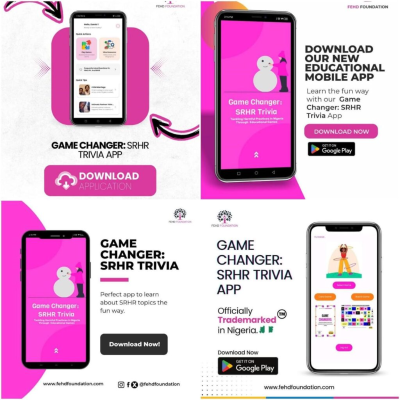
In 2024, FEHD Foundation developed an innovative app, GAME CHANGER: SRHR TRIVIA, which features two interactive games: a board game and a card game. These games include questions on critical and sensitive topics such as Female Genital Mutilation (FGM), menstrual hygiene, child/Early marriage, and other SRHR-related issues.

The app was successfully launched on the Google Play Store, making it accessible to students across different continents.
Picture2-1024x1024
CHANGE CHAMPIONS PROJECT (2025 - 2026)

Empowering rural communities to challenge harmful practices and advance gender rights.

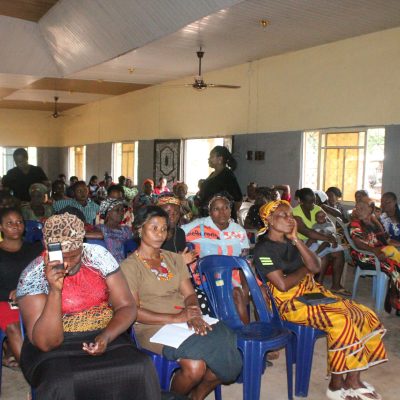
Through the Change Champions project, FEHD Foundation aims to empower women, girls, and gender-diverse persons in six rural communities by building the knowledge, confidence, and leadership needed to challenge harmful practices such as Female Genital Mutilation (FGM) and Gender-Based Violence. The project will establish a strong, locally rooted network of trained community contact persons, health workers, key influencers, and local organisations. This network will be equipped with practical tools—including educational apps, media content, and advocacy resources—to drive awareness, strengthen community engagement, and shift harmful social norms. As a result, we expect increased community-level dialogue on gender rights, improved access to accurate sexual and reproductive health information, and a measurable decline in support for harmful traditional practices. Ultimately, Change Champions seeks to foster safer, more inclusive communities where women, girls, and gender-diverse persons can live free from violence and discrimination, and actively participate in decisions affecting their lives.

The app was successfully launched on the Google Play Store, making it accessible to students across different continents.
IMG_1487 (1)
GEMS PROJECT (2018–2020)

Tackling menstrual stigma and empowering adolescent girls in Southeast Nigeria
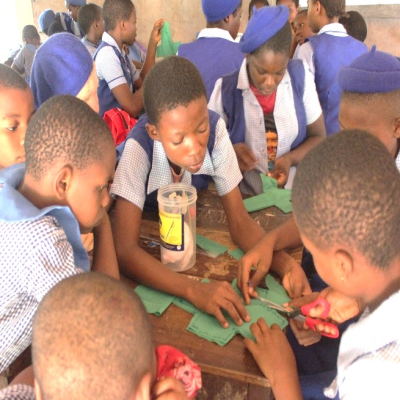
Between 2018 and 2020, the GEMS Project implemented a transformative intervention that broke the long-standing silence around menstruation among adolescent girls in six secondary schools across Southeast Nigeria. Through a combination of menstrual health education, safe-space dialogue sessions, and the distribution of menstrual hygiene kits, the project reached over 600 girls directly. Participants reported increased confidence, improved menstrual hygiene practices, and reduced school absenteeism during their menstrual periods. Beyond the girls themselves, the project also strengthened the capacity of school staff to provide ongoing menstrual health education and support. As a result, several participating schools established menstrual hygiene clubs—many of which remain active today. This achievement not only addressed a deeply rooted cultural taboo but also reinforced our approach of integrating education, empowerment, and community involvement. It affirmed our belief that when girls are informed, supported, and empowered, they can challenge harmful norms and thrive. The success of the GEMS Project continues to inspire our ongoing and future work in advancing girls’ rights, health, and dignity across rural communities in Nigeria.
07-1

The C’EST la VIE - 2022-2024

CLV

Project has been central to our mission of advancing sexual and reproductive health rights (SRHR) while challenging cultural norms that perpetuate harmful practices. In 2024, we extended our outreach to new communities and mobilized local actors to join the cause.

Through partnerships with traditional leaders, activists, journalists, and local influencers, we organized workshops that fostered dialogue around topics like menstruation, SRHR, and gender equality. The project engaged over 500 women and adolescents across various communities, equipping them with knowledge and practical tools to advocate for their rights.

Mapping Study

Result of the mapping study

The findings revealed that FGM prevalence remains high in southern Nigeria, while gender-based violence continues to be a significant issue in the norther and central regions. This data guides our future interventions as we prioritize regions with the highest need.
Region FGM Prevalence GBV Prevalence Access to SRHR Services
North-East Nigeria Low High Moderate
South-East Nigeria High Moderate High
South-West Nigeria Moderate Low Moderate
North-Central Nigeria Low Moderate Low
South-South Nigeria High High Moderate